Saturday, 8 November 2008

Earls

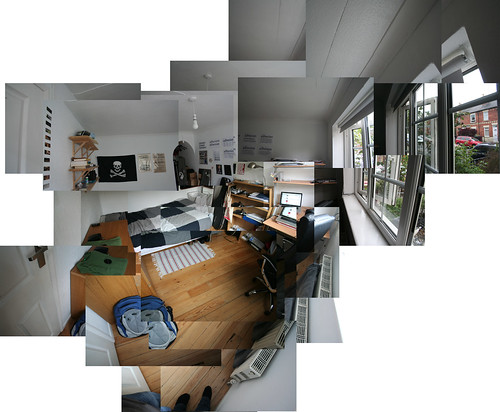
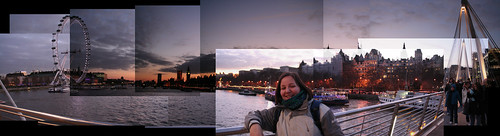
This morning I woke up early and I took Earleigh road to go to the Earley station.

Thursday, 30 October 2008

Arabic Workshop

This week we had the Arabic workshop with Fiona Ross. We started on tuesday with an introduction to the script and especially Fiona’s experience in managing the design and production of Arabic typefaces for Linotype, through the case history of the re-development of Yakout by Tim Holloway, and the several steps of revision they went through. We also started drawing right away, to get a feel for the shapes and get acquainted with the Arabic script. The first day ended with some of us going to see the La graine et le mulet, a French movie about some arab expatriates in France.

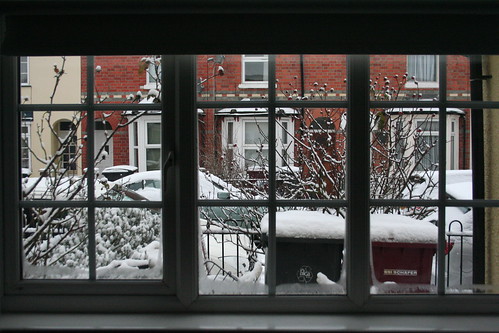
The day also the weirdest in Reading so far, weather-wise: I went to the department in the morning without my jacket because there was a wonderful sunny sky and it was quite warm, then it started to rain (cats and dogs!) in the afternoon. The high point was reached when coming out from the movie: it was snowing!

Snow in Reading!

The second day of the workshop was spent mostly drawing and sketching, with a lecture by Yannis Haralambous in the afternoon on the nuances of Unicode, OpenType, how typefaces actually work from a technical point of view, what are the problems involved in developing typefaces for complex scripts like Arabic, and how computers deal with them, TeX, and other geeky things. It was very intense and very challenging to follow Yannis’ super-sharp mind as he was explaining these concepts – which I admit I though I had a much better understanding of that it turned out to be the case.

Arabic calligraphy excercises

Today we mostly kept on sketching and looked with Fiona at other issues related to Arabic typeface development, starting from calligraphic/lettering sketches and then going to the computer. We also did a class evaluation of several Linotype typefaces together, to see how our understanding of Arabic shapes was developing. The workshop ended with Fiona showing us some of the materials in the department collection and giving some feedback on our sketches.

All in all it’s been a great ride. While I can’t claim to know very much about the Arabic script, I certainly learned a lot this week: I now know some of the pitfalls and major problems in developing an Arabic typeface, and can identify and reproduce some of the glyphs needed.

By the way: many thanks to Deema, our classmate from Saudi Arabia. All the time I was sketching and I couldn’t figure out for the life of me what I was writing of it was even readable, so I used her eye to help me during these three days. Thanks!

Tuesday, 28 October 2008

Phileas

It traveled from Shangai (China) to Incheon (Korea) to Warsaw (Poland) to Köln (Germany) to Apeldoorn (Netherlands) back to Köln (Germany) to Stansted (United Kingdom) and finally to Reading. Ladies and gentlemen, let me introduce you phileas, standing side by side with my former laptop, oscar:

phileas and oscar side by side

It has a good feel to it, the new trackpad is very nice and with the help of Migration Assistant I was back in business in about two hours – lovely. The screen is very reflective but I guess I’ll get used to it. Let’s get cracking!

I’m off to Fiona Ross’ Arabic workshop.

Saturday, 25 October 2008

Unger Workshop

BHOLD UNGER TYPE WK

The first few weeks of the course we where all waiting for the drawing to start: on tuesday Gerard Unger came to Reading to hold our first practical workshop. The week was very intense, I’m presenting here my excercises and results.

Gerard and Émilie

The first morning Gerard showed us some material then proceeded asking us to start thinking about how to design typefaces for continuous reading on a mobile phone screen. He said we should think about it, sketch, then have a first “smoke proof” (my words, not his) by inking our drawings, photocopying and reducing them. I thought it was a bit awkward to proceed in this way, because if you want to design a typeface for screen you should really be doing it, you know, on screen. I then understood that Gerard wanted us to think more about the process than the result, especially for those of us who had never put together a typeface before. With that in mind, I set out to work on some sketches for a generic low-resolution typeface.

I thought I would make a typeface with very low contrast, huge x-height and very short descenders and ascenders, and experiment by making the connection between the curves and the stems very contrasted. This idea is pretty popular at the moment in the form of ink traps, but I tried making it even more experimental by introducing an idea used by Simoncini in his Selene newspaper typeface (I’ll talk about Selene, Simoncini and my research on it much more at length later on).

As for the style of the typeface, I experimented with several lowercase as before settling on one I thought would be appropriate and resistant enough, by making some experiments with reduction with the photocopier. I then drew many other glyphs in order to compose some test words, photocopied, inked them and finally pasting them together:

pasted and inked

I probably designed my cuts too narrow, so on Gerard’s suggestion I tried to see if I could remove them or make them more visible to see how they would perform. I experimented with reducing them to “regular” ink traps or filling them in completely, looked from a distance, squinting, etc. then I proceeded with digitizing my drawings.

base version

While digitizing I also tried making the connections from the curves to the stems very spiky, then producing more extreme versions of my cuts and bites and combining these with the spiky connections by making the typeface a multiple master. That way I could produce variations and see how they would perform side by side at various sizes. At this point I wasn’t thinking of screen rendering anymore (although I kept an eye on it in FontLab) but was trying to get at least a good printout from the laser printer in the MA room, which was driving me insane.

And that was it: in four days I produced a whopping 17 glyphs typeface with two Multiple Master axes (Cuts & Spikes) and conducted some experiments on how you can distort a letter before it becomes unusable. Although I’m aware that the fitness for purpose of this typeface is questionable at best (it didn’t go anywhere near a mobile phone screen!) it made me reflect on what it is to actually deal with distortion in your letter shapes, how the photocopier and the laser printer and the screen do completely different things to your letters and on possible strategies to try and counter it.

I also had a lot of fun at first drawing, inking, photocopying, pasting, etc. although I must admit it got tedious incredibly fast, because I’m just so much more productive in FontLab it doesn’t even compare.

my type case

Bonus track: when cutting and pasting my letters, I basically had a type case of letters I had designed and I actually had to manually kern some of them to make them fit. Kerning by scissors, insane fun!

Sunday, 19 October 2008

Ersatz

The new word for today is ersatz. I was reading the article Future Tendencies in Type Design written in 1985 by Hermann Zapf in Visible Language, volume XIX number 1, and he wrote:

Janson is a typical seventeenth century typeface and should be respected as an original design of this historic period in the Netherlands. It was created out of the spirit and artistic background of that time. The Janson is, in my opinion, not at all an espression of the alphabet in the twentieth century. […] It is possible to design something new within the structure of the Janson, but we should leave the foundry design alone and create a new Janson, not just make an ersatz design.

According to Wikipedia, ersatz is a German word literally meaning substitute or replacement.

The Secret Society

The forces of evil have been summoned to create a new, secret society for typeface design students. Dices have been rolled, bits have been flipped, everything is ready for the deployment of the new .org-anization. Hints about its evil identity are scattered all over the place. Keep your doors locked, your serifs bracketed and your mouths shut about it, because it’s definitely coming!

Friday, 17 October 2008

A Minor Miracle

When I was in primary school I didn’t mind learning how to write. I remember I hated colouring stuff, so much so I used to take back homework to my teacher saying I used to prefer it in black and white (and get a note for that). But writing was OK. I wasn’t great at it, and I later found out that I had learned to make all the loops in my round shapes in clockwise direction, which is the opposite of what you want when writing in the style they teach kids in Italy, which is some sort of simplified English roundhand. I remember at one point playing with my handwriting, I must have been six or seven, trying to condense it horizontally or to expand it, and sticking with these experiments for weeks on end.

I realised all my double clockwise loops where way too time consuming and hurtful for my wrist when I was in secondary school, and then moved onto high school and university. I was quite quick at writing, but I couldn’t for the life of me figure out what I had written, when trying to decode my notes back at home. That eventually became a problem in high school, when I had to re-read all my essays to my professors because they couldn’t quite decipher anything of mine. When I went to university I had already pretty much given up on my handwriting. I think I have a pretty good sense of shapes, alignment and space on the page, but the signs themselves where messy and just impossible to read. My first university exam was a written one; I was in a class with 150 other students (oh yeah!) and the professor walked in to announce the results. He said it took him a long time to go through all the papers, and that in one case he just had to give up because the handwriting was so bad. Guess who’s paper that was?

As a last resort I sort of tried migrating to all caps when I had to write short notes, but as anybody who knows a bit of calligraphy, ALL CAPS is not really meant to be written with a pen, so that somewhat makes matter worse. It’s also way more slow than proper cursive, because all the shapes are separated and you’re always raising the pen and going back to the paper, then again and again.

Enter my love/obsession for typography at about the age of 20, just after entering university. I just loved looking at the shapes and I found I was quite good at keeping them in my head, recognising them back once I saw them, noticing the nuances and details. It just frustrated me that with my poor handwriting – and drawing skills, I must add – I would never be able to do any of that on my own. I felt I could look at type, but I wasn’t allowed to make it, I felt like an outsider.

For some reason, three years ago I started thinking back at designing type, I just couldn’t get it outside my head. I started redrawing with bezier paths on the computer old, dead typeface from Italian foundries. I remember sending over to my friends a screenshot of a lowercase a in FontLab: the point placemenet was all wrong and the proportions didn’t quite match, but guess what? It was there! I then drew more and more, but still strictly on the computer. At the beginning of last year I had had enough of my handwriting inferiority complex and decided to enrol in a calligraphy class with ACI (Associazione Calligrafica Italiana). My teacher, Francesca Biasetton, taught me the basis of the Cancelleresca script, a beautiful Renaissance handwriting style that few people practice today in Italy, and fewer use it as an everyday handwriting.

experiments in cancelleresca

My first experiments sucked, of course, but I was really surprised: I wasn’t as bad as I planned, I could do it! That was a revealing moment for me. After that, I started drawing and drawing and drawing every day, with all sorts of pens and quills and pencils, trying different styles and methods, then digitising my drawings and restart again. I’m not a great calligrapher by any means, but my handwriting now is reasonably readable, I can fake many writing styles and make things look pretty and neat. And I can also play with the shapes regardless of the tool, which is the key to proper type design.

I can’t quite explain why I felt having a good handwriting was a requisite for being a type designer – it’s not – but probably it was just a self-challenge I had to overcome in order to start pursuing this new interest/passion.

I understand this might sounds like nothing to you, but to me it feels like I experienced a minor miracle. And the best part is that it’s still going on as I get more and more practice!